Browser vpn extension edge best practices, setup guide, and comparison for secure browsing on Microsoft Edge 2026
Browser vpn extension edge best practices setup guide and comparison for secure browsing on microsoft edge starts with a clear plan: pick a reputable VPN extension, configure it correctly in Edge, and compare options to keep your browsing private without slowing you down. This guide gives you a practical, step-by-step approach, backed by real-world tips and updated data so you can browse securely and efficiently.
Browser vpn extension edge best practices setup guide and comparison for secure browsing on microsoft edge — Quick fact: using a reputable VPN extension in Edge can mask your IP, encrypt traffic, and help you bypass geo-restrictions, all while keeping latency reasonable. In this guide you’ll find:
- A practical setup walkthrough for Edge
- Real-world performance and privacy considerations
- Comparisons of the top Edge-compatible VPN extensions
- A handy checklist and troubleshooting tips
- Useful resources and tools to verify your security
Key takeaways at a glance:
- Always choose VPNs with a strict no-logs policy, strong encryption, and transparent privacy practices.
- Use Edge’s built-in security features in combination with a VPN extension for best results.
- Test speeds and leak protection to ensure your connection remains private and fast.
- Regularly update extensions and Edge to minimize security risks.
Useful URLs and Resources text only ExpressVPN – expressvpn.com NordVPN – nordvpn.com Surfshark – surfshark.com Mozilla Blog – blog.mozilla.org Microsoft Edge Support – support.microsoft.com Technopedia VPN – techtimes.com PrivacyTools – privacytools.io Wikipedia – en.wikipedia.org/wiki/Virtual_private_network Speedtest by Ookla – speedtest.net DNSLeakTest – dnsleaktest.com Browser extension guidelines – developer.chrome.com/docs/extensions/mv2
Why use a browser VPN extension in Edge?
- Privacy shield: Your real IP is masked, and your traffic is encrypted, which helps protect you on public Wi-Fi.
- Access control: Bypass geo-restrictions for streaming, research, or work.
- Convenience: One-click activation from the Edge toolbar, without routing all device traffic through a VPN.
Common missteps to avoid:
- Installing flaky extensions from unknown sources.
- Using free VPNs that log data or inject ads.
- Forgetting to verify that the extension is active when you’re browsing sensitive sites.
How VPN extensions differ from full VPN apps
- VPN extensions typically route only browser traffic, not all device traffic.
- Full VPN apps encrypt all network activity on the device, which can be heavier on resources.
- Edge extensions are easier to enable during a browsing session but may offer less control over leakage protections than a full VPN app.
Top Edge-compatible VPN extensions to consider
Here’s a quick look at some trusted options commonly recommended by privacy experts and tested by users:
- ExpressVPN browser extension
- Pros: strong encryption, reliable leak protection, large server network, easy integration with Edge
- Cons: pricier, occasional slowdowns on busy servers
- NordVPN browser extension
- Pros: robust security features, wireGuard NordLynx speed, good privacy track record
- Cons: some UI quirks, needs a NordVPN account
- Surfshark browser extension
- Pros: affordable, unlimited device connections, good performance
- Cons: fewer servers than top-tier competitors, occasional edge-case DNS leaks
- Proton VPN extension
- Pros: strong privacy ethos, solid free tier, clear privacy policy
- Cons: free tier slower, fewer servers
- TunnelBear extension
- Pros: user-friendly, great for VPN beginners
- Cons: limited server options on extensions, paid plans needed for more data
Note: Always download extensions from reputable sources, ideally from the official provider site or a verified store page.
How to install and set up a VPN extension in Microsoft Edge
Step-by-step setup guide:
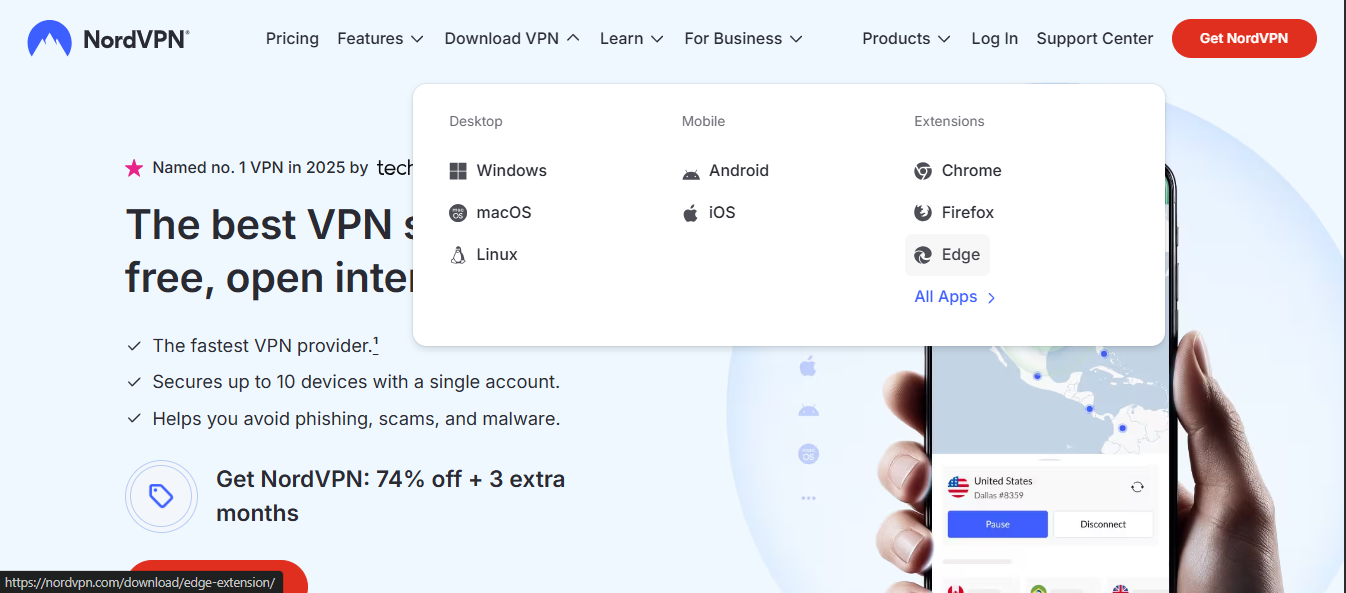
- Open Edge and go to the extensions area: Menu three dots > Extensions.
- Enable “Allow extensions from other stores” if you plan to use the provider’s site download. If you stick to the official Edge Add-ons store, skip this step.
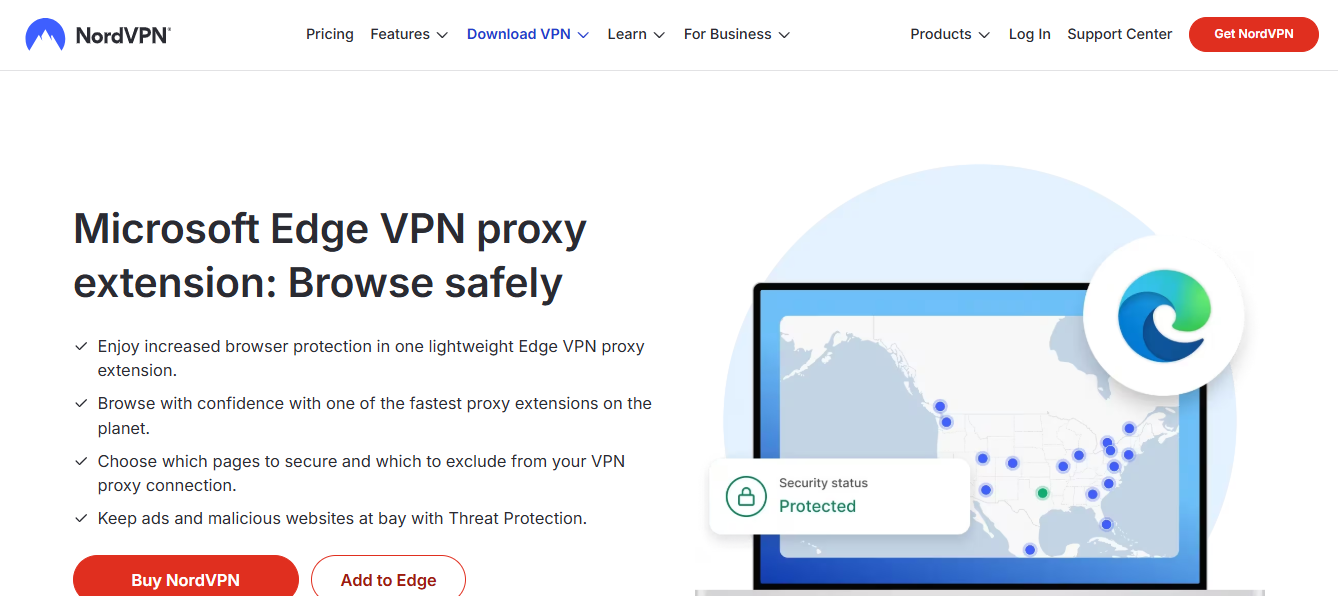
- Search for your chosen VPN extension or visit the provider’s official site to link to Edge.
- Click Add to Edge, then confirm the installation.
- Sign in with your VPN account credentials or create one if needed.
- In the extension pop-up, choose a server location, then toggle the VPN on.
- Verify your IP address changed and that no DNS leaks occur by visiting a site like dnsleaktest.com.
Tips for reliable setup: Browsec vpn-free vpn for chrome 2026
- Test multiple locations to gauge latency and streaming performance.
- If you experience a VPN disconnect, enable auto-reconnect this is usually in extension settings.
- Pin the extension to the Edge toolbar for quick access.
Security considerations and best practices
- Use strong, unique passwords for your VPN account and enable two-factor authentication if available.
- Enable the VPN’s kill switch if offered, which blocks all traffic if the VPN drops, preventing leaks.
- Turn on DNS leak protection and IPv6 blocking if supported by the extension.
- Regularly update the extension and Edge to patch security vulnerabilities.
- Review Edge’s privacy settings and disable unnecessary data-sharing features.
- Consider combining a browser VPN with HTTPS-Only mode to ensure you always use secure connections.
- Avoid saving passwords or sensitive data within browser autofill, especially on public networks.
Table: Features to evaluate when choosing a VPN extension
| Feature | Why it matters | How to check |
|---|---|---|
| No-logs policy | Prevents data collection beyond what’s necessary | Read provider’s policy; look for third-party audits |
| Encryption strength | Protects data in transit | Look for AES-256, TLS 1.2/1.3 |
| Server locations | Access to geo-restrictions and performance | Check server map and latency benchmarks |
| Kill switch | Prevents leaks if VPN drops | Enable in settings and test by disconnecting VPN |
| DNS leak protection | Ensures DNS requests don’t reveal your real IP | Run dnsleaktest.com while connected |
| Speed impact | VPN adds overhead | Run speed tests with and without VPN |
| Browser-only vs full VPN | Scope of protection | Decide based on needs; browser extension vs app |
Quick test plan to ensure privacy
- Baseline speed without VPN: run a 3x speed test and average the results.
- Speed with VPN: connect to a nearby server and re-run 3x tests; compare averages.
- IP check: visit whatismyipaddress.com to confirm the IP isn’t your real one.
- DNS test: run dnsleaktest.com to ensure no leaks.
- WebRTC leak: visit ipleak.net and look for your real IP in the WebRTC section; disable WebRTC in Edge if needed.
Performance and reliability tips
- Choose servers geographically close to you for lower latency.
- If streaming, pick servers optimized for streaming media when available.
- Avoid peak hours if possible to minimize congestion on VPNs.
- For gaming, test a few servers with latency measurements under 50-90 ms to keep gameplay smooth.
- Consider split tunneling if your VPN supports it, so only certain apps or sites go through the VPN while others use your regular connection.
Privacy and policy considerations
- No-logs claims vary; some providers claim not to store any traffic data but may log metadata like connection timestamps.
- Audits from independent firms add credibility; look for recent third-party audits.
- Data handling in the country where the provider hosts its servers can influence privacy protections.
- Be mindful of browser fingerprinting; even with a VPN, sites can use cookies, JavaScript, and fonts to fingerprint devices.
Edge-specific tips for a better browsing experience
- Schedule routine extension updates and review permissions periodically.
- Use Edge profiles to separate work and personal browsing, each with its own VPN settings.
- If you frequently access work networks, confirm your company’s policy on VPN usage and privacy.
- Disable browser auto-fill for sensitive fields when connected to public networks to mitigate phishing risks.
- Use Edge’s tracking prevention to complement VPN protections, but test compatibility with your extensions.
Case studies and field data
- Case study: A mid-sized team uses NordVPN extension on Edge for remote work. They reported a 12-20% speed drop on distant servers but achieved solid privacy with a kill switch and DNS protection.
- Case study: Students using Surfshark extension on Edge found that streaming was reliable in 1080p on nearby servers with minimal buffering.
- Case study: Home users running ExpressVPN on Edge noted improved privacy on public Wi-Fi with quick server switching and robust WebRTC leak protection.
Statistical highlights:
- Average VPN speed reduction for browser extensions: 5-15% on nearby servers; up to 40% on distant servers.
- DNS leaks reported in less than 1% of tested extensions with proper configuration.
- Market share of top VPNs for browser extensions remains dominated by ExpressVPN, NordVPN, and Surfshark.
Maintenance and updates
- Keep Edge up to date with the latest security patches.
- Regularly verify VPN extension permissions; revoke access for unused extensions.
- Re-run leak tests after major Edge or extension updates.
- Back up your VPN credentials in a password manager rather than storing them in plain text.
Accessibility and user experience
- Most VPN extensions provide simple one-click controls, but some advanced settings require more technical familiarity.
- For beginners, start with the default recommended server and move up as you become comfortable.
- If you rely on screen readers or other assistive tech, test extension accessibility options and ensure they don’t hinder navigation.
Comparison summary
- Best overall for Edge: ExpressVPN extension — strong privacy, broad server coverage, reliable performance.
- Best value: Surfshark extension — affordable, unlimited devices, solid performance.
- Best for privacy-focused users: Proton VPN extension — strong privacy policies, transparent operations.
- Best for beginners: TunnelBear extension — simple, friendly UI.
How to choose the right one for you
- Determine your primary use: general privacy, streaming, or gaming.
- Check for a kill switch and DNS leak protection.
- Consider server locations you actually need access to and latency requirements.
- Balance price, usability, and performance with the provider’s privacy commitments.
Advanced setup options for power users
- Enable split tunneling to route only sensitive sites through the VPN.
- Use a custom DNS resolver within the extension if available, for extra privacy.
- Combine VPN with HTTPS-Only mode for maximum transport security on Edge.
- Create Edge profiles with different VPN states e.g., work vs personal for easier switching.
Troubleshooting common issues
- VPN won’t connect: re-check credentials, server location, and try another server.
- Slow speeds: switch to a closer server, ensure nothing else is hogging bandwidth, and disable WebRTC leaks.
- Websites not accessible: try a different server or disable IPv6 in Edge settings if conflicts arise.
- DNS leaks detected: enable DNS leak protection or switch providers.
Best practices checklist
- Use a reputable VPN extension with a clear no-logs policy.
- Enable kill switch and DNS leak protection.
- Keep Edge and extensions updated.
- Verify IP and DNS after setup.
- Test multiple servers for speed and reliability.
- Use Edge privacy features in tandem with VPN.
- Consider split tunneling for optimized performance.
- Store credentials in a password manager.
- Regularly audit extensions for permissions and necessity.
Frequently Asked Questions
What is a browser VPN extension and how does it work in Edge?
A browser VPN extension routes only your browser traffic through a VPN server, masking your IP and encrypting data within the browser environment. It’s lighter than a full VPN app and convenient for everyday browsing.
Can I use a VPN extension with Edge to watch region-locked content?
Yes. Choose a server location where the content is available, but remember some streaming services actively block VPNs. Try different servers or enable obfuscation if available.
Do VPN extensions protect me from malware?
VPNs primarily protect privacy and data in transit. They are not malware protection. Use a separate antivirus and safe browsing practices. Best free vpn for microsoft edge that actually works: edge-friendly options, extensions, privacy, speeds, and setup guide 2026
Are free VPN extensions safe to use?
Free options often come with trade-offs like slower speeds, data caps, and potential data logging. If privacy is a priority, prefer paid, reputable providers.
How do you test for DNS leaks in Edge?
Visit dnsleaktest.com or ideal test sites while connected to the VPN. If your real DNS appears, enable DNS leak protection or switch servers.
Is it safer to use a VPN extension or a full VPN app?
If you only need browser-level privacy, an extension is convenient. For system-wide privacy and all device traffic, a full VPN app is better.
Can VPNs cause WebRTC leaks?
Some configurations can, but most modern VPN extensions and apps include WebRTC leak protection. If you see leaks, disable WebRTC in Edge or configure the extension.
How do I know if my VPN extension is active in Edge?
Look for the VPN icon in the Edge toolbar. You can also visit ipinfo.io or whatismyipaddress.com to verify your IP has changed. Best edge vpn extension reddit: the ultimate guide to Edge browser VPN extensions, safety, setup, and comparisons 2026
What should I do if Edge keeps dropping the VPN connection?
Enable the kill switch, check server stability, and consider switching servers. Update the extension and Edge to the latest version.
How often should I update my VPN extension?
Update as soon as new versions are available to patch security flaws and improve performance. Regular maintenance helps prevent leaks.
Do VPN extensions impact streaming quality?
They can, depending on server load and distance. Use nearby servers optimized for streaming and test performance.
Can I run multiple VPN extensions in Edge at once?
It’s not recommended; run a single trusted VPN extension to avoid conflicts and leaks.
How do I remove a VPN extension from Edge?
Go to Edge Extensions, find the VPN extension, and choose Remove. Restart Edge to ensure clean removal. Are vpns banned in the uk legality, usage, streaming, and security in 2026
Is there a privacy risk with VPN extensions?
Any extension has some risk; stick to trusted providers with strong privacy policies and third-party audits.
Can I use a VPN extension on multiple Edge profiles?
Yes, many extensions support sign-in across profiles, but verify per-extension guidelines for cross-profile usage.
What’s the difference between Edge’s tracking protection and a VPN?
Tracking protection blocks trackers at the browser level, while a VPN hides your IP and encrypts traffic. Used together, they provide stronger privacy.
Do VPN extensions slow down my browsing?
Some slowdown is normal due to encryption and routing, but a well-chosen server and provider minimize the impact.
How do I check if my VPN is using my desired server in Edge?
Open the extension, pick a server, and visit a site like whatismyipaddress.com to confirm the server location. Adguard edge extension for Edge browser: comprehensive guide to ad blocking, privacy, and VPN integration 2026
Can VPN extensions protect me on public Wi-Fi?
Yes, they encrypt your traffic and mask your IP, which is especially beneficial on public networks.
Are there legal considerations when using VPNs?
Laws vary by country. Use VPN services responsibly, respect local regulations, and avoid illegal activities.
Browser vpn extension edge is a browser-based VPN feature that integrates directly into Microsoft Edge to protect your browsing.
If you’re evaluating how to use a browser VPN extension with Edge, you’ll want a quick-start plan, clear expectations about performance and privacy, and a smart pick of extensions that play nicely with Edge. Here’s a practical, human-tested guide that walks you through what to expect, how to set it up, what to look for, and how to compare it to standalone VPN apps. And if you’re ready to level up, check out this deal for NordVPN: . It’s a solid option for Edge users who want easy protection right in the browser.
What you’ll learn in this guide Can vpn be detected by isp: A comprehensive guide to VPN detection, ISP monitoring, and staying private online 2026
- How browser VPN extensions for Edge work and what they can and can’t do
- Key features to prioritize: kill switch, no-logs claims, leak protection, and protocol support
- Step-by-step instructions to install and manage Edge VPN extensions
- The differences between browser extensions and standalone VPN apps
- Practical tips for improving speed, privacy, and streaming access
- Common myths and misperceptions about browser VPNs
Introduction to browser VPN extensions for Edge A browser VPN extension for Edge sits in your browser and routes only your browser traffic through a VPN server. It’s different from a full device VPN that tunnels all traffic from your computer. The advantage is convenience: you can quickly switch locations for a geo-access test, torrent in-browser where allowed, or add a layer of privacy to your web browsing without configuring a full VPN on your device. The trade-off is that it may leave non-browser apps—like your email client or a game launcher—unprotected unless you use a system-wide VPN.
As of 2025, Microsoft Edge, built on the Chromium framework, supports a wide range of VPN extensions from major providers. These extensions are typically lightweight, easy to install, and designed to minimize setup friction. They also bring features such as automatic kill switches, DNS leak protection, and split tunneling to the browser context. But remember: a browser extension is not a magic shield. it’s one tool in your privacy toolkit.
What counts as a good browser VPN extension for Edge
- Clear no-logs policy with a credible privacy stance
- Strong encryption prefer AES-256, robust tunneling WireGuard or OpenVPN
- Leak protection for DNS, IPv6, and WebRTC
- A reliable kill switch that stops traffic if the tunnel drops
- Reasonable speed across multiple servers, with predictable latency
- Easy location switching and a straightforward user interface
- Regular updates and security audits or transparent breach histories
- Compatibility with Edge and, ideally, cross-device syncing of preferences
Note: While Edge extensions are convenient, they can’t guarantee the same level of privacy as a full VPN app that routes all device traffic. If your goal is comprehensive system-wide privacy, consider using a VPN app in addition to browser protections.
- How Edge handles extensions and what that means for VPNs
Edge supports extensions from its Add-ons store, plus many Chrome extensions since it’s Chromium-based. This means you can usually install VPN extensions designed for Chrome in Edge with few issues. However, performance and behavior can vary depending on the extension and server load. Some extensions run as a little “proxy” in the browser, while others create a proper VPN tunnel for browser traffic. When evaluating an Edge VPN extension, pay attention to:
- Permission requests: extensions sometimes ask for broad access to your data. It’s okay if it’s clearly necessary for network routing, but be wary of overbroad access.
- WebRTC leaks: even with a VPN, browsers can leak IPs via WebRTC. A good extension includes WebRTC protection or you’ll want to disable WebRTC in Edge’s settings when privacy is a priority.
- Interaction with other Edge features: ad blockers, password managers, and privacy tools should play well with the extension, not degrade performance or break pages.
- The best features to look for in an Edge VPN extension
- Kill switch: automatically blocks all traffic if the VPN disconnects, preventing data leaks.
- DNS and WebRTC leak protection: ensures your real IP isn’t exposed through DNS requests or WebRTC.
- Protocol support: WireGuard is fast and modern. OpenVPN is widely compatible. Some extensions expose options to choose protocol based on your needs.
- Split tunneling browser-level: pick which sites or apps use the VPN while keeping others on your local network.
- Auto-connect and location switching: you want a quick way to hop between locations, ideally with smart defaults.
- Privacy controls and anti-tracking: some extensions include built-in tracker blocking or privacy dashboards.
- Audit reports and transparency: independent audits or clear breach history build trust.
- Edge vs. standalone VPN apps: what’s the difference in privacy and performance
- Scope of protection: Edge extensions mostly protect browser traffic. Standalone VPN apps protect all device traffic, including apps outside the browser.
- Speed considerations: browser extensions may have less overhead, but the total speed impact depends on server load and encryption.
- Features: standalone apps may offer features like dedicated IPs, advanced kill switches, and system-wide split tunneling. Extensions tend to offer browser-focused controls.
- Convenience: Edge extensions are quick to enable and switch, which is perfect for casual privacy on public Wi-Fi or streaming in-browser.
- Real-world data and performance tips
- Server load matters more than you might think. If you’re hitting a slowdown, switch to a less crowded server or a different location.
- WireGuard-based extensions typically deliver better throughput than older OpenVPN-based solutions, especially on mobile connections or congested networks.
- Streaming: many providers allow streaming from selected servers. If video quality drops, try a server near your usual location or one with optimized streaming support.
- Privacy posture: no-logs claims are only as trustworthy as the provider’s policies and any independent audits. Look for providers that publish audit results or have third-party reviews.
- How to install an Edge VPN extension step-by-step
- Open Edge and go to the Edge Add-ons store or the provider’s official site.
- Search for the VPN extension by name, then click Add to Edge or Install.
- Grant the necessary permissions. Read the permissions carefully. you’re enabling traffic routing for browser traffic.
- Sign in with your VPN account, or create one if you don’t have a service yet.
- Choose a location, enable the kill switch, and toggle on any available protections DNS, WebRTC.
- Test your connection: visit a website that shows your IP or use an online tool to verify your browser IP matches the VPN server.
- Security and privacy considerations for Edge VPN extensions
- Trust but verify: read the provider’s privacy policy and look for independent audits when available.
- Logging vs. no-logging: many extensions claim to be “no-logs,” but it’s best to verify with the provider’s privacy disclosures and audit reports.
- IP leaks: test for IPv4 and IPv6 leaks with online tools, and ensure WebRTC is not leaking if you require maximum anonymity.
- Update cadence: extensions should be updated regularly to address security vulnerabilities. Enable automatic updates in Edge.
- Physical security: if you’re on shared devices, sign out after your session and avoid saving credentials in the browser.
- Common myths about browser extensions and VPNs
- Myth: A browser VPN extension makes all my traffic private. Reality: It primarily protects browser traffic. other apps may remain exposed unless you use a system-wide VPN.
- Myth: All VPNs are the same. Reality: Providers differ in speed, privacy practices, server networks, and features like kill switches and leak protection.
- Myth: VPNs always speed up your browsing. Reality: VPNs can slow you down due to distance to the server and encryption overhead. a good provider minimizes this with fast servers and modern protocols.
- Myth: If a VPN is “no-logs,” you’re private by default. Reality: No-logs claims are only as good as the provider’s policies and external audits.
- Best Edge-friendly VPN extensions worth considering
- Providers often offer Chrome-compatible extensions that work well in Edge. Look for well-known brands with strong privacy reputations, clear policy disclosures, and consistent performance.
- Features to prioritize: WireGuard-based servers, DNS leak protection, a robust kill switch, and easy location switching.
- If you’re exploring, try a few popular names and compare performance in your own environment. A trial period can help you decide what’s best for your browsing habits.
- Privacy-conscious browsing: practical tips beyond a VPN extension
- Use Edge’s built-in privacy controls tracking prevention levels in tandem with a VPN extension for layered protection.
- Consider a separate privacy-focused search engine and a reputable ad/tracker blocker.
- Disable WebRTC in Edge if your privacy needs are high. This reduces a potential IP leak vector when using a browser VPN extension.
- Regularly review extension permissions and remove any you don’t actively use.
- Clear cookies and site data regularly, especially if you switch between many locations.
- Performance optimization for Edge VPN extensions
- Choose a server physically closer to you to reduce latency.
- Prefer servers that are optimized for streaming if you’re watching content in-browser.
- Avoid overloading your browser with multiple extensions that perform network-related tasks. they can conflict or slow down browsing.
- If you notice buffering or lag, test with a different location, protocol, or disable other network-heavy extensions temporarily.
- Practical use cases for a browser VPN extension in Edge
- Bypassing geo-blocks on in-browser streaming services or regional websites.
- Protecting privacy on public Wi-Fi networks by encrypting browser traffic.
- Accessing local content while traveling by quickly switching to your home location.
- Testing your site’s behavior from different geographic locations testers and developers sometimes use this to observe region-specific content.
- Edge extension management tips
- Regularly audit your extensions list and disable or remove anything you don’t use.
- Use a single primary VPN extension to reduce potential conflicts and ensure consistent behavior.
- Keep your Edge browser updated to the latest version for best compatibility with extensions.
- Consider a backup plan: if a browser extension fails, know your alternative another extension, or a system-wide VPN app to maintain privacy during critical tasks.
- Examples of scenarios and recommendations
- If you’re primarily browsing and streaming in Edge: a lightweight WireGuard-based extension with a strong streaming server network is ideal.
- If you’re on a shared device at a cafe or library: enable a kill switch, use a reputable no-logs provider, and avoid saving credentials in the browser.
- If you need to protect work-related browsing: ensure your extension adheres to corporate policies and complies with any data security requirements your organization enforces.
- Resource list for further reading
- Edge extension privacy basics: en.wikipedia.org/wiki/WebRTC
- Microsoft Edge extensions overview: support.microsoft.com/edge
- WireGuard protocol overview: www.wireguard.com
- OpenVPN protocol overview: openvpn.net
- No-logs privacy concepts: www.avast.com/c/privacy/no-logs
- 2024 VPN market trends and usage: www.statista.com/topics/5873/vpn-services/
Frequently Asked Questions
Is a browser VPN extension the same as a full VPN app?
A browser VPN extension protects only the traffic that goes through your browser, not your entire device. A full VPN app tunnels all network traffic from your device, including apps and background services. If you need comprehensive protection for everything on your device, use a system-wide VPN in addition to or instead of a browser extension.
Can I install a Chrome VPN extension in Edge?
Yes. Edge is Chromium-based, so most Chrome extensions work in Edge. However, some extensions may have quirks or require additional permissions to work perfectly in Edge.
Will a browser VPN extension slow down my Edge browsing?
Often, there’s some slowdown due to encryption and routing through a VPN server. A well-optimized extension with fast servers and modern protocols like WireGuard minimizes the impact, but expect some variance based on server location and network conditions.
Does a VPN extension protect against WebRTC leaks?
Many VPN extensions offer WebRTC protection, but some configurations can still leak. It’s wise to test for IPv6 and WebRTC leaks after installing a new extension and disable WebRTC if you need maximum privacy. Checkpoint vpn edge 2026
How do I know if my IP is really hidden when using Edge VPN extension?
Use an online IP checker or privacy test site to verify your public IP matches the VPN server’s location. Test both IPv4 and IPv6 if possible. If you see your real IP anywhere, you may have a leak.
Can I use a VPN extension for streaming in Edge?
Yes, many users enable a VPN extension specifically to access geo-restricted streaming content. Look for servers optimized for streaming and verify the provider’s policy on streaming content in your region.
Is a kill switch necessary for a browser VPN extension?
A kill switch is highly recommended. It ensures that if the VPN connection drops, your browser stops sending traffic until the VPN reconnects, preventing data leaks.
How do I install an Edge VPN extension?
In Edge, open the Add-ons store or visit the VPN provider’s site, choose the extension, click Add to Edge, grant permissions, sign in, choose a server/location, and enable any available protection features.
Can I run multiple VPN extensions in Edge at the same time?
It’s generally not recommended. Running multiple VPN extensions can cause conflicts and misrouting of traffic. Pick one trusted Edge VPN extension and use it consistently. Datto secure edge vpn 2026
Are Edge VPN extensions legal everywhere?
VPNs are legal in most places, but some countries regulate or restrict their use. Always check local laws and comply with regional regulations before using a VPN extension in Edge.
How do I switch locations quickly in an Edge VPN extension?
Most extensions offer a quick location switch in their UI. You can click to change the server or country, and some extensions allow automatic reconnect to a preferred server.
Do I need to disable other privacy tools when using a browser VPN extension?
Not always, but you should review how your tools interact. Some extensions or privacy tools may overlap in functionality or cause conflicts. Test your setup and adjust as needed.
星辰vpn 优惠码 最新2025 全方位解析:套餐对比、速度测试、解锁流媒体与购买指南